Working with Alternate Text for Graphics and Images
Review the following guidelines when using Alternate Text:
| Attribute | Usage |
|---|---|
| AlternateText | The attribute is optional. It must be defined to enable screen reading of an image alternate text. If the attribute is not present, no alternate text is associated with the image. |
To provide a description for an image that is read by a screen reader you can use alternate text associated with the image reference. The alternate text is implemented as an attribute and written as text (a string) that is then read when the user passes over the associated image.
The AlternateText attribute is available within the any of the three image elements; InlineGraphic, ExternalGraphic, and ImageReference. Right-click an image element and select Add Attribute > AlternateText.
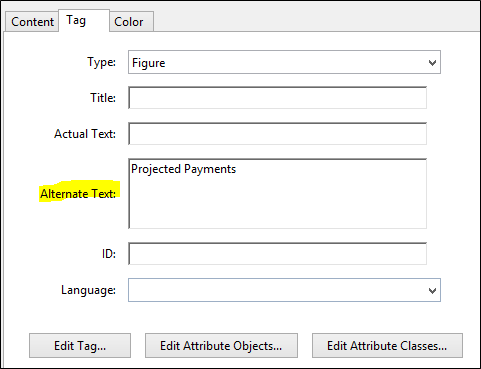
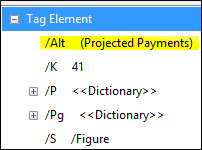
When producing a Tagged PDF (see Creating a Tagged PDF), text alternatives for images are required for accessibility and will fail accessibility checker rules if not present. The tag for images will populate with the /Alt entry and this alternate text is read out loud by the screen reader.
- In the Requirements Editor tool, open the REQ file and navigate to the desired position in the document.
- Right-click the element and select .
- Right-click the newly inserted InlineGraphic element and select Choose Picture.
-
In the Open dialog that appears, navigate to the location
of the image file to be assigned to the InlineGraphic and click Open. The image
appears in the REQ Outline Editor tab.
Note: The Open dialog filters the file types to display only: .jpeg, .jpg, .gif, .tif, .png, and .bmp
- Right-click the InlineGraphic element and select . This is a best practice for ADA Compliance.
- Enter a description of the graphic image that would describe the image to someone listening to the document being read to them.
-
There are other optional attributes available for
InlineGraphics; Height, TagType and Width. The values for
the Height and Width attributes are a numeric value followed by a
unit of measure. Example: Entering .5in for the Height attribute
value would reduce the image to only consume space of one half inch high.
TagType allows you to select how the image should be formatted on the
page; automatically in the context of the line or as an H2 through H6.
The image appears in the Outline Editor tab and appears in the document when assembled.