| Attribute | Usage |
|---|---|
| colspan | The attribute is optional. It is defined with an integer value indicating the number of columns an entry element needs to span. |
For tables with a row > entry element (thead or tbody), a colspan attribute is used when a given cell of the table needs to span multiple columns. The user indicates the number of columns to span by adding this attribute and entering the colspan value (integer).
Right click the entry element and select Add Attribute > colspan from the shortcut menu. 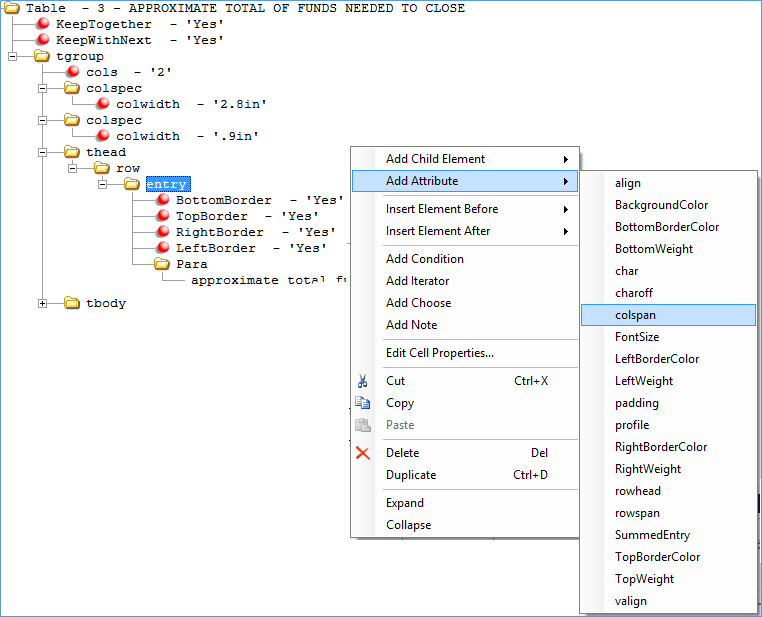
In the colspan attribute, enter an integer value to indicate the number of columns to span. There is no default value.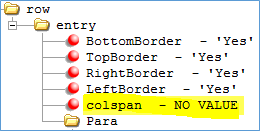
If the Tagged PDF option is selected (see Creating a Tagged PDF), the tag markup behaves differently for Data Tables versus Layout Tables.
Data Table
The tag for a cell entry with the colspan attribute is marked with the /ColSpan attribute in the attribute element (/A) to indicate to span the desired number of columns. The tag for a cell marked with the /ColSpan attribute only appears once in the tag tree (it is not repeated for the spanning columns).
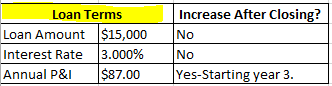
Data Table with colspan Attribute
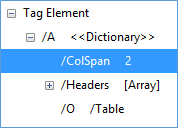
Table Header Cell Tag Spanning Two Columns
Layout Table
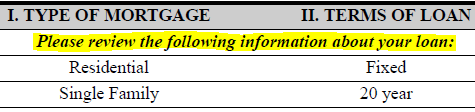
Layout Table with colspan and reading order is ColumnByColumn
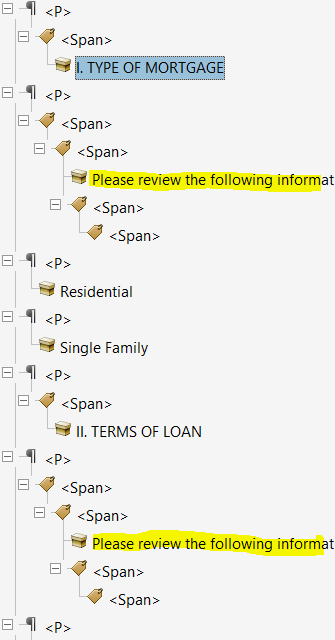
Cell tag is duplicated so spanning column reads in logical order when ColumnByColumn
Layout Table with colspan and reading order is RowByRow
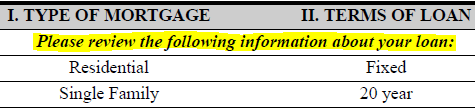
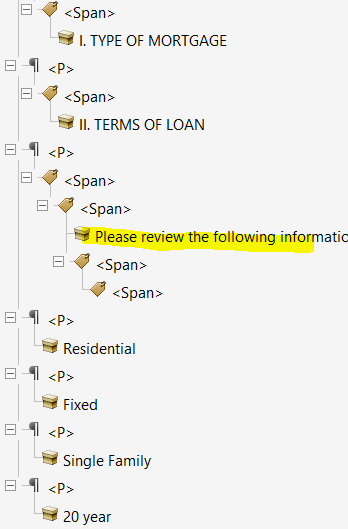
Cell tag is created once so the spanning column reads in logical order when RowByRow